OTP lead verification: how it ends fake leads
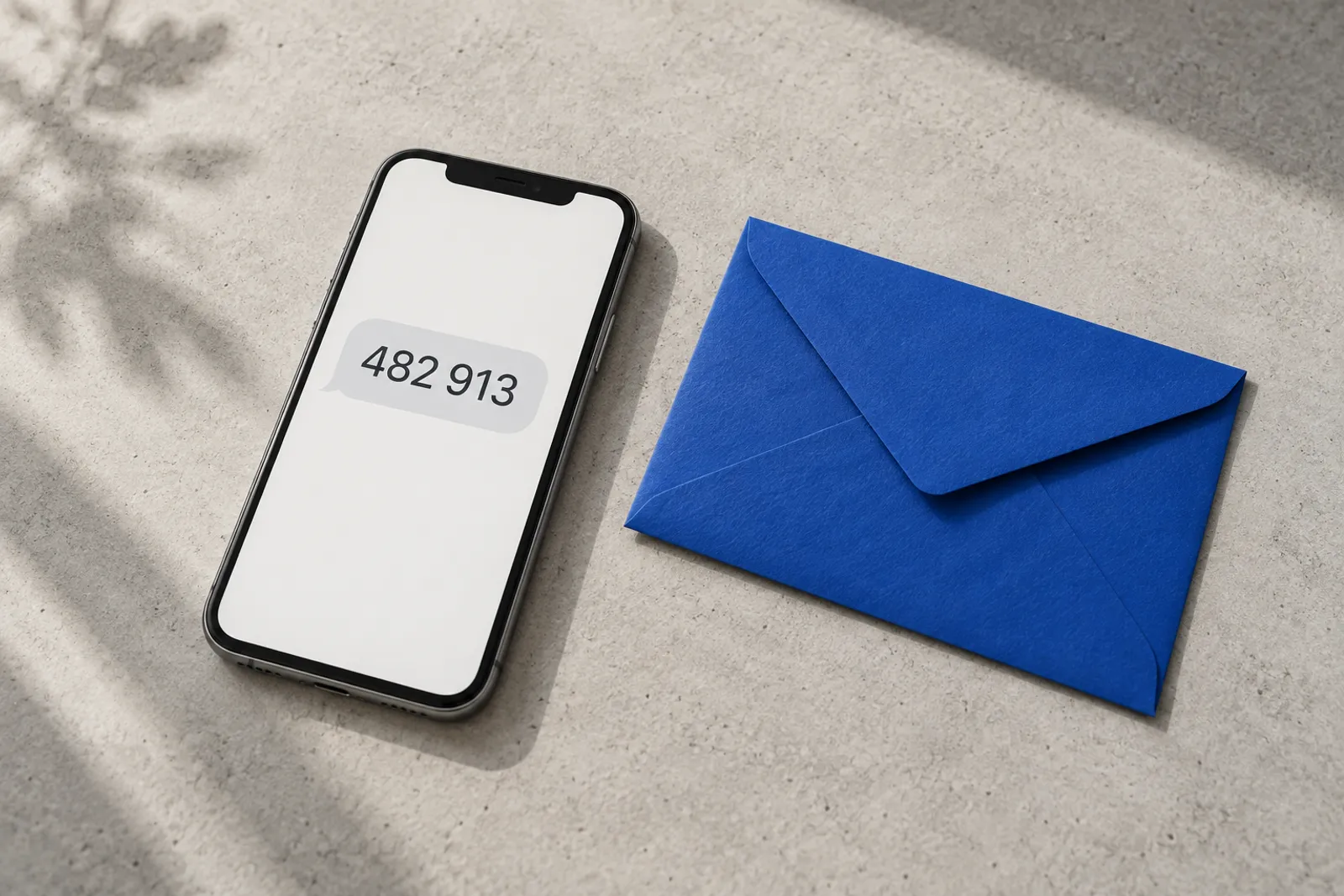
A six-digit code sent to a phone and another sent to an inbox. Here’s what that simple step proves about a lead, what it stops, and what it honestly can’t tell you.
Anyone who has bought leads knows the feeling: you dial the number and it’s disconnected, or it belongs to someone who never filled in a form. You email and it bounces. OTP lead verification exists to end that. Before a lead is delivered, the prospect proves that the phone number and the email address they typed are real and theirs, by entering a one-time code sent to each.
It is a small step with a big effect on lead quality, but it’s worth being precise about what it does. Verification confirms that you can reach a real person. It does not read minds. This guide explains how it works, what it stops, what it can’t prove, and why it changes the way leads can be billed.
What a one-time code is
A one-time password, or OTP, is a short code — usually six digits — generated for a single use and sent to a specific phone number or email address. It works for a few minutes, then expires. You have probably entered dozens of them to log in to your bank or confirm a purchase. Nothing about the code itself is secret or clever; its value comes entirely from where it is sent.
The principle is simple: only someone with access to that phone or that inbox, right now, can read the code and type it back. Typing the correct code is proof of access. That is exactly the question a business needs answered about a new lead: can I actually reach this person at the details they gave me?
How SMS and email OTP verify a lead
At Yesleads, every lead goes through two checks before it reaches you:
- Phone, by SMS code. The prospect fills in the request form. A code is texted to the number they entered, and they type it in to continue. If the number is wrong, fake or can’t receive a text, the code never arrives and the step can’t be completed.
- Email, by email code. A second code is sent to the email address they entered. Typing it in proves the inbox exists and that the prospect can open it.
Only when both codes are confirmed is the lead delivered — to your CRM, by email or by SMS. It takes the prospect a few moments, and it happens at the moment they are most motivated: right after asking to be contacted.
Why both channels
Checking only the phone leaves you with bouncing emails; checking only the email leaves you with dead numbers. Most follow-up uses both — a call, a text, a quote sent by email — so both need to work. Two confirmed channels also give you a second route when the first one is quiet: a prospect who doesn’t pick up may still read an email.
What verification stops
Most fake leads aren’t malicious. They are small errors and shortcuts that add up. A one-time code filters out:
- Typos. One wrong digit in a phone number or one missing letter in an email is enough to lose a real prospect. With a code, the mistake shows up immediately and the prospect fixes it on the spot.
- Fake numbers and throwaway details. “555” numbers, 123-4567, or asdf@ addresses can’t receive a code.
- Bots and form spam. An automated script filling in forms doesn’t have a real phone and a real inbox to read codes from.
- Someone else’s details. If a person enters a neighbour’s phone number or a colleague’s email, the code goes to that neighbour or colleague — not to the person filling in the form — and the request stops there.
- Wasted calls. Your team no longer spends the first hour of the day dialling numbers that don’t work.
The result is simple to describe: every lead you receive has a phone number that received a text and an email that received a message, confirmed by the prospect.
Why this matters more than it seems
A fake lead doesn’t only cost its own price. It costs the call that goes nowhere, the email that bounces and the minutes a salesperson spends working out what went wrong. It also distorts your numbers: if one lead in five can’t be reached, your close rate looks worse than your team really is, and it becomes hard to tell whether a campaign, an offer or a follow-up process is working. Removing unreachable contacts at the source gives you a clean base to measure from.
What OTP verification does not prove
It is just as important to be honest about the limits. A verified lead is a real, reachable person who asked to be contacted. Verification does not tell you:
- whether the prospect is ready to buy today, next month or just comparing prices;
- whether they have the budget for your service;
- whether they will pick up when you call, or reply to your first text;
- whether they also asked other businesses for a quote.
Those are questions of intent and timing, and no code can answer them. That is where your follow-up comes in: calling fast, trying again, and using more than one channel. Yesleads does not use AI to screen or score leads; its AI instant engagement replies to each new lead within seconds and keeps the conversation going until your team takes over. We explain why the first minutes matter in speed to lead.
Why verification makes every lead billable
In lead generation, the billing argument is usually about quality: “this one was fake,” “that number didn’t work.” Without verification, those disputes are hard to settle, because nobody can prove what happened. With verification, the question has a clear answer. The phone received a code and the prospect typed it back. The inbox received a code and the prospect typed it back.
That is why, at Yesleads, a verified lead is billable whether or not it answers your call. You are paying for something objective — a real person who asked to be contacted and confirmed how to reach them — not for an outcome that depends on timing, your offer or your follow-up. It keeps the price per lead fixed and predictable, and it means every lead you pay for is one your team can genuinely work.
Getting the most from a verified lead
Because both channels are confirmed, you can use both from the start:
- call first, while the request is still fresh;
- if there’s no answer, text right away — the number is confirmed to receive messages;
- send your details or your quote by email, knowing it lands in a real inbox;
- keep trying over several days, at different times of day.
If a verified lead doesn’t answer the first time, it isn’t a dead lead; it’s a follow-up job. Our guide to leads who don’t answer covers what to do next.
The bottom line
A one-time code by SMS and another by email is a small step for the prospect and a big one for you: no more dead numbers, bouncing emails, bots or pranks in your pipeline. It doesn’t replace a good salesperson, and it doesn’t pretend to know who is ready to buy. It makes sure every lead is someone you can actually reach.
See where verification fits in the full process on how it works, compare models in pay per lead vs pay per click, or ask for a quote for verified leads in your market.
Share this article